
Radial Flow Settlers: Efficient Solid Removal in Aquaculture Systems
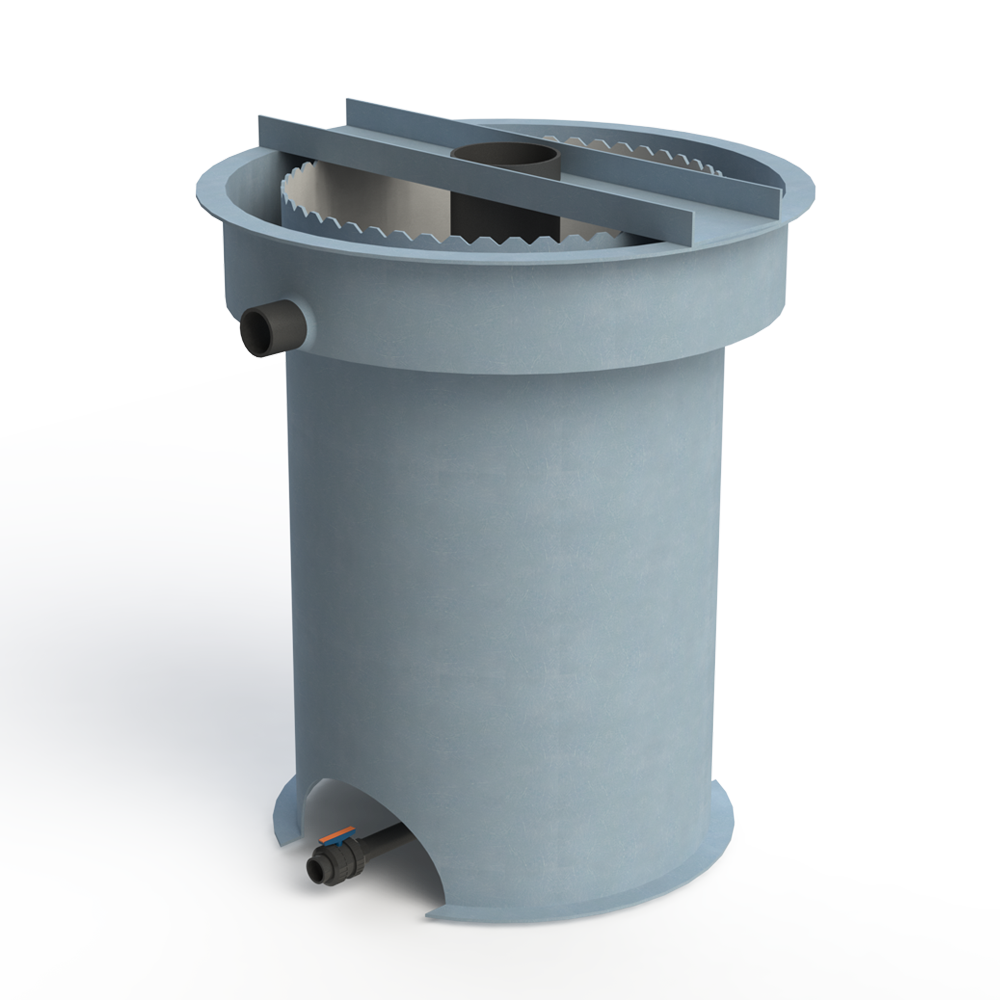
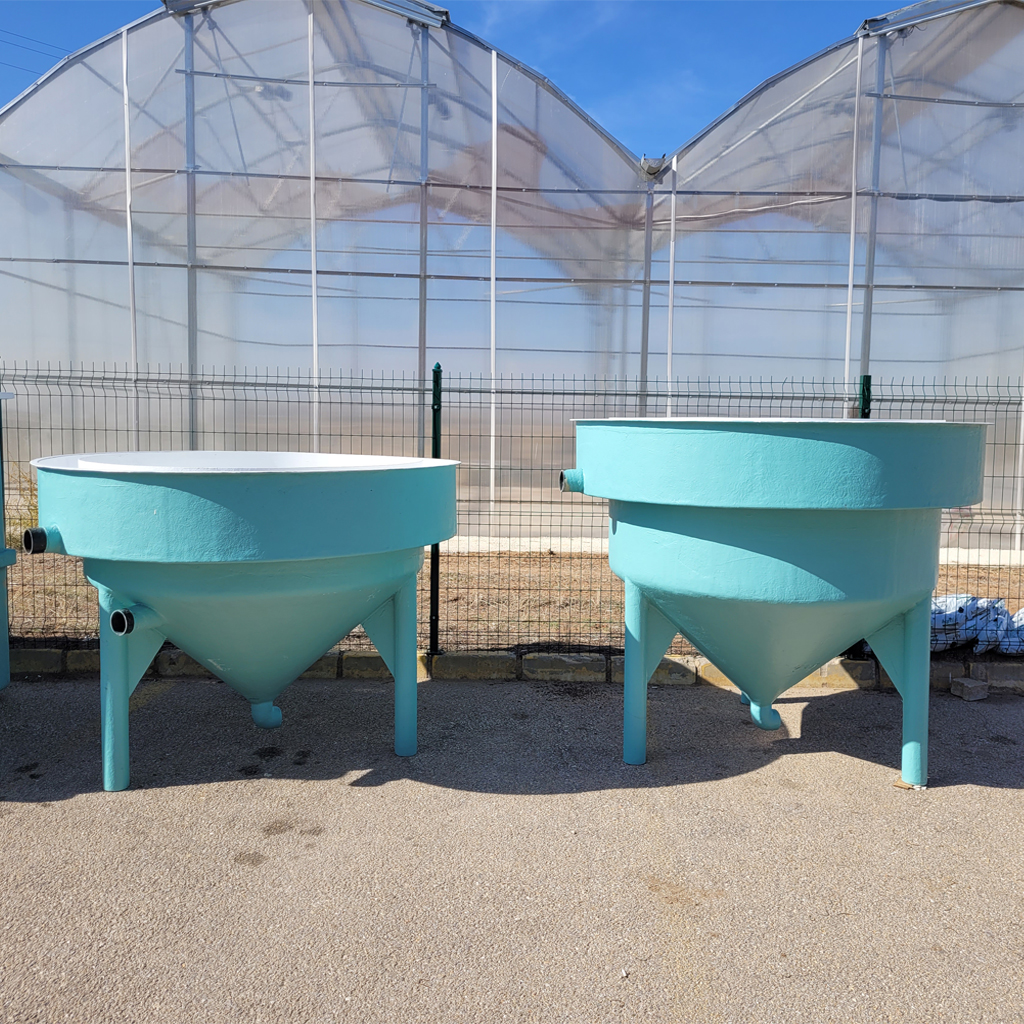
In modern aquaculture, water quality is not just a supporting factor—it is the foundation of fish health, feed efficiency, and system stability. One of the earliest and most critical steps in maintaining clean water is effective removal of suspended solids before they break down and compromise the system. This is where Radial Flow Settlers (RFS) play a vital role.
Radial flow settlers are simple yet highly effective mechanical filtration units designed to separate settleable solids from water using gravity and controlled water movement. Widely used in recirculating aquaculture systems (RAS), aquaponics, and hatcheries, they offer a low-energy, low-maintenance solution for primary solids removal.
What Is a Radial Flow Settler?
A radial flow settler is a gravity-based mechanical filter that slows incoming water and redirects it outward in a radial pattern. As water velocity decreases, heavier suspended particles—such as fish waste, uneaten feed, and organic debris—settle at the bottom of the tank, while clarified water exits from the top.
Unlike pressurized filters, radial flow settlers rely on hydraulic design rather than mechanical force, making them highly energy-efficient and reliable.
The core principle is simple: slow the water, spread the flow evenly, and let gravity do the work.
How Radial Flow Settlers Work
Water enters the settler through a central inlet pipe and is directed downward into a diffusion chamber or inlet cup. This design eliminates turbulence and distributes flow evenly across the tank.
As water moves outward and upward in a circular pattern:
- Flow velocity drops dramatically
- Suspended solids lose kinetic energy
- Heavier particles settle into the sludge zone at the bottom
Cleaned water exits through an overflow or standpipe, while accumulated solids are periodically removed through a bottom drain.
This controlled flow path is what makes radial flow settlers more efficient than simple sedimentation tanks of the same size.
Read more about:Nanobubble Technology for Efficient Oxygen Delivery
Why Solid Removal Matters in Aquaculture
Suspended solids are not just a cosmetic issue. If left untreated, they:
- Break down into ammonia and nitrite
- Increase biological oxygen demand (BOD)
- Clog biofilters and reduce nitrification efficiency
- Promote harmful bacteria and pathogens
- Stress fish and reduce growth performance
By removing solids before biological degradation begins, radial flow settlers protect downstream filtration components and stabilize overall water quality.
Key Advantages of Radial Flow Settlers
Radial flow settlers are popular in aquaculture for several good reasons.
They operate with very low energy consumption, requiring no moving parts or pressurized pumps. This makes them ideal for systems aiming to reduce operational costs and energy use.
Their simple construction and maintenance are another advantage. Routine operation typically involves only periodic sludge purging, without backwashing or media replacement.
Radial flow settlers also integrate smoothly with other filtration technologies. When installed upstream of biofilters, drum filters, or moving bed reactors, they significantly reduce organic loading and extend the lifespan of more advanced equipment.
From small research systems to commercial-scale farms, they offer scalable and cost-effective solids management.
Read more about:What Is an Oxygen Generator and How Does It Work?
Radial Flow Settlers in RAS and Aquaponics
In recirculating aquaculture systems, radial flow settlers often serve as the first mechanical filtration stage. By removing settleable solids early, they:
- Reduce ammonia spikes
- Improve biofilter efficiency
- Lower maintenance frequency for fine filtration units
In aquaponics systems, their role becomes even more important. Captured solids can be mineralized and reused as plant nutrients, turning waste into a resource instead of a disposal problem.
Design Considerations for Maximum Efficiency
While radial flow settlers are simple, their performance depends heavily on proper design and sizing.
Flow rate must be carefully matched to tank volume to ensure adequate retention time. Excessive flow velocity will carry solids through the unit, while undersized settlers will overload quickly.
Inlet geometry is critical. Poorly designed inlets create turbulence, reducing settling efficiency. A well-designed diffuser ensures smooth, even distribution of incoming water.
Regular sludge removal is also essential. Allowing solids to accumulate for too long can lead to anaerobic conditions and nutrient release back into the water column.
Read more about:Comparing Nanobubbles vs. Oxygen Cones in Aquaculture: A Scientific Overview
How AtlasAqua Integrates Radial Flow Settlers
At AtlasAqua, radial flow settlers are not treated as standalone components but as part of a fully engineered filtration strategy. System design considers:
- Stocking density and feed rates
- Flow dynamics across the entire RAS
- Integration with biofiltration and polishing units
- Long-term operational efficiency
By combining radial flow settlers with modern filtration technologies, AtlasAqua helps aquaculture facilities achieve cleaner water, healthier fish, and lower operational costs—without unnecessary system complexity.
Radial Flow Settlers vs. Advanced Mechanical Filters
While drum filters and microscreens offer finer particle removal, radial flow settlers remain highly relevant. They excel at removing large, settleable solids early, which reduces the load on high-precision filters downstream.
In many systems, the most effective approach is not choosing one over the other, but using radial flow settlers as a pre-treatment stage to improve the performance and longevity of advanced filtration equipment.
Read more about:Complete Overview of Oxygen Cones in Aquaculture
A Simple Tool with a Powerful Impact
Radial flow settlers prove that effective aquaculture filtration does not always require complex machinery. Through smart hydraulic design and gravity-driven separation, they deliver reliable solid removal with minimal energy and maintenance demands.
For aquaculture operations focused on water quality, system stability, and long-term sustainability, radial flow settlers remain a practical and proven solution—especially when integrated thoughtfully into a professionally engineered system like those developed by AtlasAqua.