
Nanobubble Agriculture: Boosting Plant and Fish Productivity
Modern agriculture and aquaculture are under constant pressure: the demand for higher yields, sustainable methods, and resource-efficient production is growing. Traditional systems often struggle with oxygen delivery, disease prevention, and nutrient optimization. Enter nanobubble technology, a cutting-edge solution that is transforming the way plants and fish thrive. At AtlasAqua, we specialize in implementing nanobubble systems that maximize productivity while maintaining environmental sustainability.
Nanobubbles are ultra-fine gas bubbles that improve dissolved oxygen levels in water, delivering significant benefits for both plant roots and aquatic species. By integrating this technology into aquaponics and aquaculture, growers can unlock unprecedented growth rates, system efficiency, and overall health.
What Are Nanobubbles? A Deep Dive
Nanobubbles are extremely small gas bubbles, usually less than 200 nanometers in diameter—so tiny that they are invisible to the naked eye. Unlike larger bubbles, which quickly rise to the surface and burst, nanobubbles remain suspended in water for hours or even days. This unique property allows gases such as oxygen, ozone, or carbon dioxide to dissolve efficiently, improving water quality and biological activity.
Read more about: What Are Nanobubbles and How Do They Work in Water?
Key Physical Properties of Nanobubbles
- Size and Surface Area: Their nano-scale size dramatically increases surface area, enhancing gas transfer efficiency.
- Longevity: Nanobubbles do not rise rapidly; they maintain gas concentration over time.
- Charge (Zeta Potential): Many nanobubbles carry a negative charge, which helps prevent particle aggregation and enhances water clarity.
- Gas Versatility: They can carry oxygen for aquaculture, ozone for sterilization, or CO₂ for plant photosynthesis.
The combination of small size, stability, and high oxygen-carrying capacity makes nanobubbles ideal for boosting biological processes in both soil-less agriculture and water-based systems.
Nanobubbles in Plant Growth: Maximizing Yield and Health
Oxygen is critical for plant roots. In hydroponics or aquaponics, insufficient oxygen around roots reduces nutrient uptake, slows growth, and increases susceptibility to disease. Nanobubbles deliver oxygen-rich water directly to roots, enhancing growth and productivity.
How Nanobubbles Enhance Plant Growth
- Enhanced Root Oxygenation: Nanobubbles penetrate root zones deeply, supplying oxygen consistently.
- Accelerated Nutrient Uptake: Oxygen-rich roots absorb nitrogen, phosphorus, and potassium more efficiently.
- Stronger Stress Resistance: Improved root oxygenation strengthens plants against environmental stress and pathogens.
- Disease Suppression: Certain anaerobic pathogens, such as Pythium or Fusarium, cannot survive in oxygen-rich environments.
- Faster Biomass Accumulation: Studies show a 10–30% increase in plant biomass in hydroponic setups with nanobubble-enhanced water.
Practical Tip for Growers:
Use dissolved oxygen (DO) meters to monitor oxygen levels near the root zone. Optimal DO for most hydroponic plants ranges between 6–10 mg/L. Nanobubbles can consistently maintain this level, even under dense planting conditions.
Read more about:Nanobubble Technology for Efficient Oxygen Delivery
Aquaculture Benefits: Healthier Fish and Better Yields
In aquaculture, fish health and growth are directly linked to dissolved oxygen levels. Low DO reduces feeding efficiency, slows growth, and increases mortality. Traditional aeration systems often fail to maintain uniform oxygen distribution, especially in high-density tanks. Nanobubbles solve these problems efficiently.
Advantages of Nanobubbles in Fish Farming
- Consistent Oxygen Levels: Nanobubbles maintain optimal oxygen throughout the water column, preventing hypoxic zones.
- Stress Reduction: Fish in well-oxygenated water exhibit lower stress, better appetite, and improved immune function.
- Disease Prevention: Oxygen-rich water limits harmful anaerobic bacteria, reducing outbreaks and antibiotic use.
- Faster Growth Rates: Higher DO levels increase metabolism, feeding efficiency, and overall weight gain.
- Energy Efficiency: Nanobubbles deliver more oxygen per watt of energy compared to traditional aerators.
For example, tilapia and salmon show measurable growth improvements when raised in nanobubble-enriched systems. In intensive recirculating aquaculture systems (RAS), this technology allows higher stocking densities without compromising fish health.
Read more about:Case Studies: Nanobubble Applications in Shrimp Farming
Nanobubbles and Water Quality: Dual Impact
Nanobubbles don’t just improve oxygen levels—they also enhance water quality, which benefits plants, fish, and microbial populations.
- Turbidity Reduction: Negatively charged nanobubbles repel particles, preventing clumping and maintaining water clarity.
- Oxidation of Organic Compounds: Oxygen and ozone nanobubbles break down organic waste, reducing the need for frequent water replacement.
- Microbial Balance: By supporting aerobic bacteria while suppressing anaerobic pathogens, nanobubbles promote a healthier microbial ecosystem.
- pH Stability: Improved oxygenation stabilizes water pH, crucial for plant nutrient uptake and fish metabolism.
This dual impact ensures that the system remains productive, clean, and environmentally friendly, minimizing water and energy wastage.
Read more about: Methods of Oxygenation in Fish Farming: Pros and Cons
Nanobubble Systems in Practice: Integration Tips
Integrating nanobubbles into aquaponic or aquaculture systems requires proper planning and equipment selection:
1. Nanobubble Generators
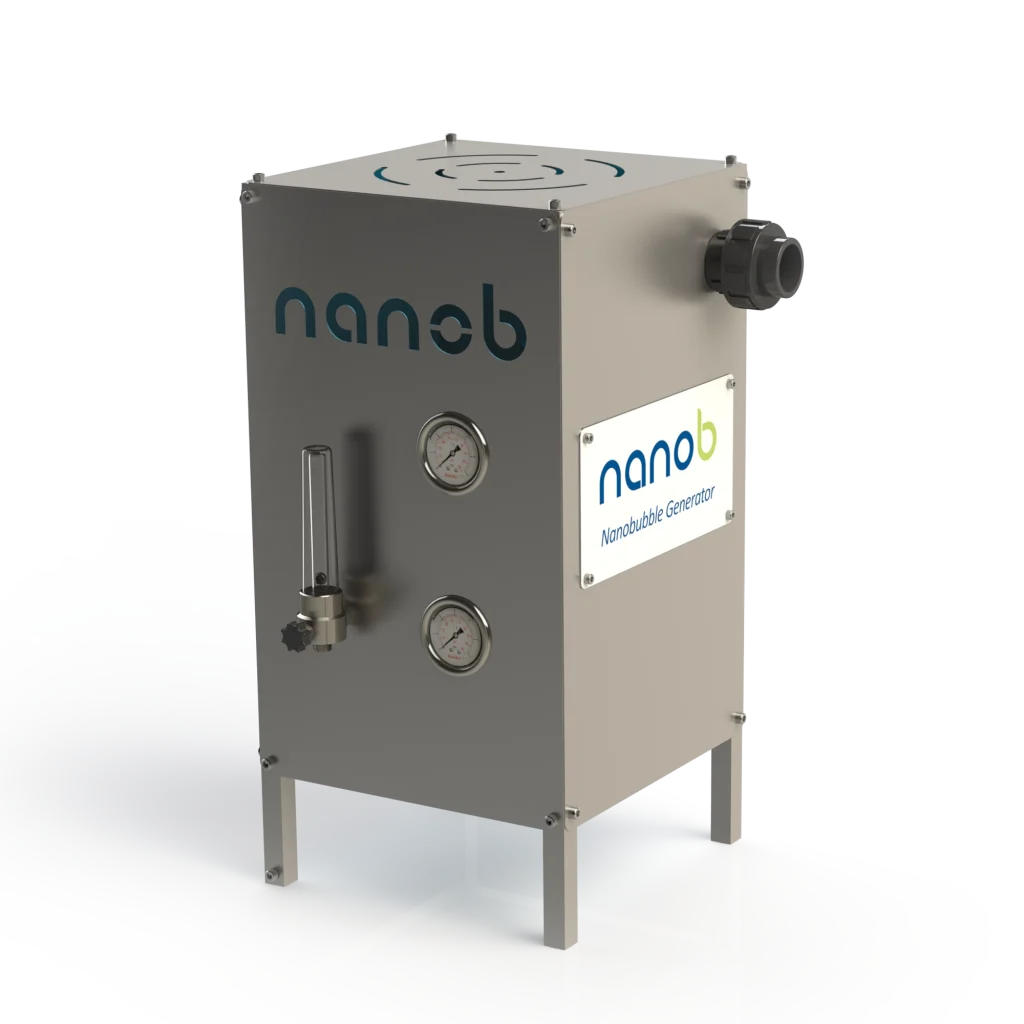
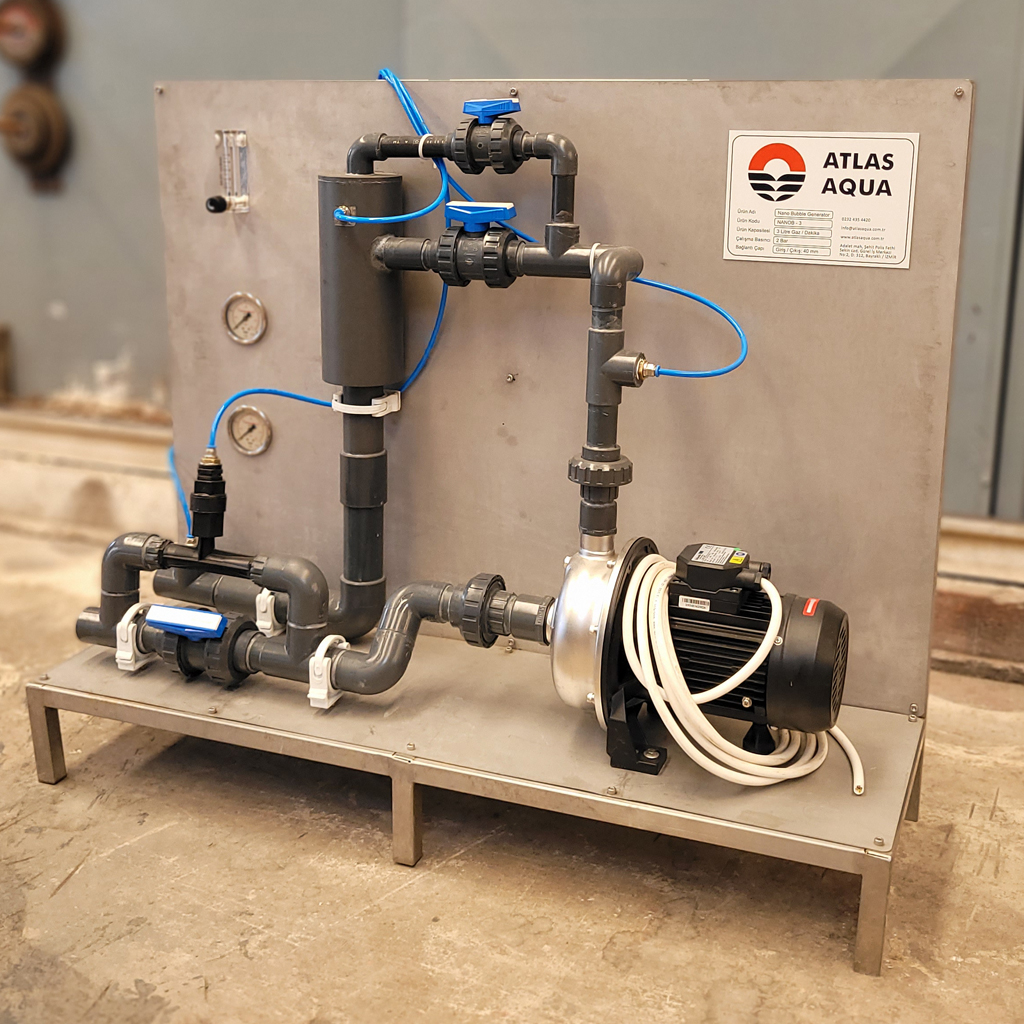
Modern generators are compact and can be added to fish tanks, hydroponic channels, or nutrient reservoirs. Ensure the generator matches the system’s water volume and desired oxygen levels.
2. Dissolved Oxygen Monitoring
Continuous DO monitoring is essential. Target ranges vary:
- Most hydroponic crops: 6–10 mg/L
- Tilapia: 5–7 mg/L
- Salmon: 7–9 mg/L
3. Maintenance and Calibration
Regular cleaning prevents fouling of the generator. Some systems require minor calibration to maintain consistent bubble size and gas concentration.
4. System Synergy
Nanobubbles work best when combined with:
- Biofilters for waste breakdown
- Proper temperature control
- Balanced nutrient solutions in hydroponics
At AtlasAqua, our systems are optimized to ensure perfect synergy between nanobubbles, biofilters, and aquaponic channels, maximizing both plant and fish productivity.
Read more about:Comparing Nanobubbles vs. Oxygen Cones in Aquaculture: A Scientific Overview
Case Insights: Real-World Impact of Nanobubbles
Several aquaponics and aquaculture trials demonstrate the transformative power of nanobubbles:
- Hydroponic Lettuce Trials: Yield increased by 25% and root health improved significantly under nanobubble-enriched water.
- Tilapia Growth Studies: Fish fed in nanobubble-aerated tanks showed 15–20% faster weight gain and lower mortality rates.
- Recirculating Aquaculture Systems (RAS): Integration of nanobubbles reduced energy consumption for aeration by 30% while maintaining high DO levels.
These results highlight the practical and measurable benefits that nanobubble technology can deliver for both small-scale and commercial operations.
Sustainability Benefits
Nanobubble agriculture is not only efficient—it’s sustainable.
- Lower Chemical Dependency: Oxygen-rich water reduces the need for fertilizers and antibiotics.
- Energy Savings: Less energy is required for aeration compared to traditional systems.
- Water Conservation: Cleaner water and efficient oxygenation reduce water replacement needs.
- Reduced Waste: Healthier plants and fish result in fewer losses and less environmental impact.
For farmers and aquaculture operators, this means a smarter, more resilient system that aligns with modern sustainability goals.
Read more about :Setting Up a Smart Aquaculture System: What You Need to Know
Future Prospects
The potential of nanobubbles extends far beyond current applications:
- CO₂ Nanobubbles for Photosynthesis: Future systems may use CO₂ nanobubbles to accelerate photosynthesis in high-value crops.
- Ozone Nanobubbles for Sterilization: Using ozone nanobubbles could reduce disease outbreaks without chemicals.
- Integration with AI Monitoring: Smart sensors could automatically regulate nanobubble generation based on oxygen demand, temperature, and nutrient levels.
At AtlasAqua, we are exploring these advancements to make aquaponics and aquaculture smarter, more productive, and fully sustainable.
Read more about :Top Smart Monitoring Tools for Aquaculture
Conclusion: Unlocking Maximum Productivity
Nanobubbles represent a game-changing innovation for modern agriculture and aquaculture. By improving oxygen delivery, enhancing nutrient uptake, and promoting healthier plants and fish, they offer measurable benefits for productivity and sustainability.
AtlasAqua’s systems are designed to harness this technology, ensuring that every liter of water works harder for your plants and fish. For farmers, aquaculturists, and hydroponic growers, nanobubble agriculture is not just an innovation—it’s a pathway to higher yields, healthier crops, and a more sustainable future.