
Designing Circular Tanks for Efficient Water Flow in Aquaculture Systems
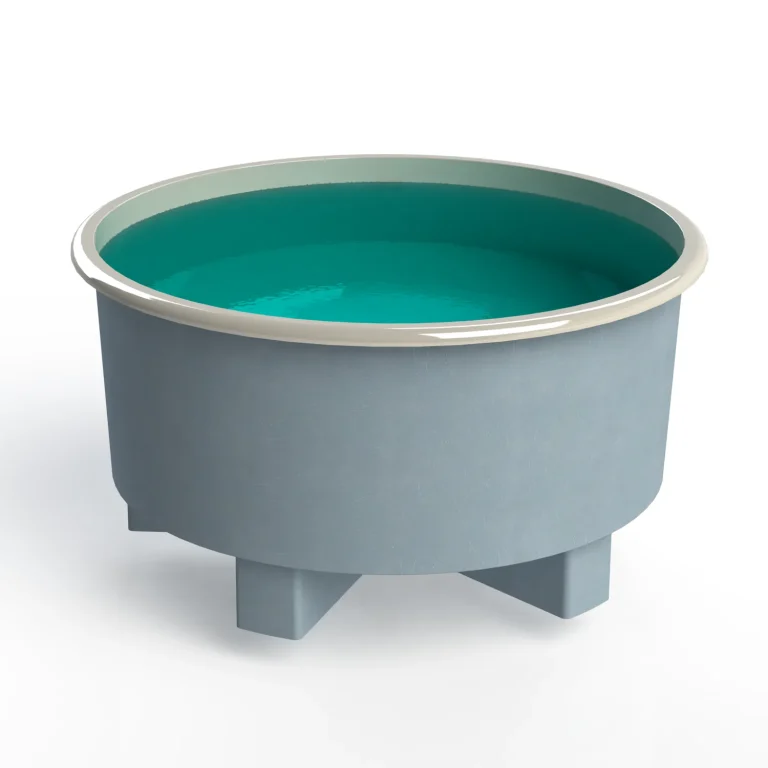
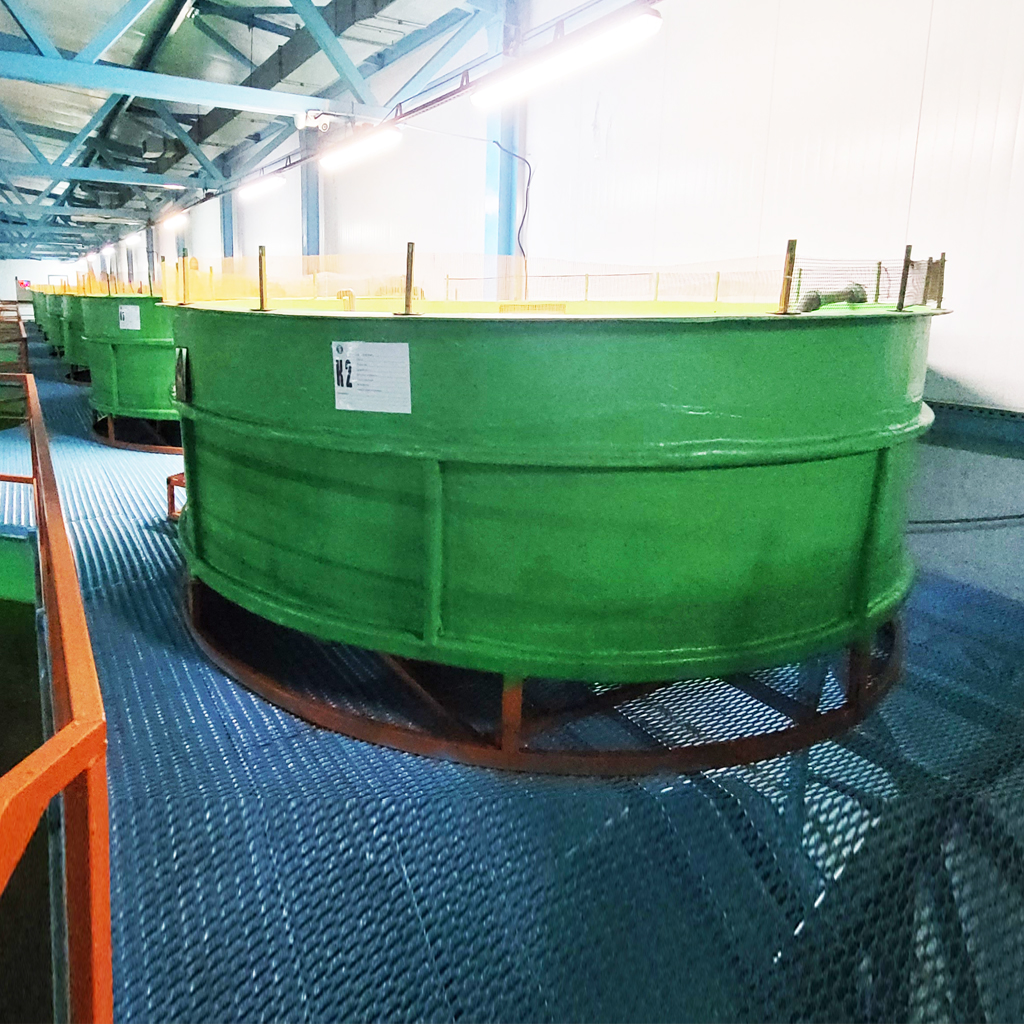
Water movement is the invisible architecture of every successful aquaculture system. While filtration technologies, aeration devices, and monitoring tools receive much attention, the geometry of the culture tank itself plays an equally decisive role in determining water quality, energy efficiency, and animal welfare. Among all tank configurations, circular tanks stand out as one of the most hydraulically efficient designs available to modern aquaculture.
At AtlasAqua, circular tank engineering is approached as a combination of fluid dynamics, biological requirements, and operational practicality. When designed correctly, circular tanks become self-cleaning environments that continuously transport waste toward removal points, distribute oxygen uniformly, and create stable conditions for high-density production.
This article explores the engineering principles, design parameters, and operational strategies behind circular tanks optimized for efficient water flow.
The Hydrodynamic Advantage of Circular Geometry
Circular tanks exploit rotational flow patterns to create a controlled vortex inside the culture volume. When water enters tangentially along the tank wall, it travels in a circular path around the perimeter before gradually moving toward the center. This motion generates two critical hydraulic effects:
First, suspended solids remain in motion rather than settling randomly on the bottom. Second, heavier particles naturally migrate toward the tank center, where they can be removed through a centrally located drain.
In contrast, rectangular tanks often contain corners and flat surfaces where water velocity decreases, forming dead zones that trap solids and reduce oxygen availability. Circular geometry eliminates these stagnation regions, allowing the entire tank volume to participate in active circulation.
The result is a tank that continuously cleans itself while maintaining homogeneous water conditions.
Read more about:What Affects Dissolved Oxygen Levels in Fish Tanks?
Water Flow as a Biological Control Tool
Water movement does more than transport waste. It directly influences fish behavior, metabolism, and growth.
Moderate, consistent circular flow encourages fish to swim steadily, which improves feed conversion ratios and muscle development. Uniform circulation also ensures that dissolved oxygen, carbon dioxide, ammonia, and temperature remain evenly distributed throughout the tank.
In systems where flow is poorly designed, fish may congregate in preferred zones, creating localized overstocking, oxygen depletion, and stress. Circular tanks prevent this clustering by providing a balanced hydraulic environment across the entire culture volume.
Read more about:The Necessity of Oxygenation in Aquaculture Farms
Core Design Parameters for Circular Tanks
Tank Diameter and Depth
The relationship between diameter and depth determines how water moves vertically and horizontally. Most production tanks operate efficiently within a depth range of 1.0 to 1.5 meters. Shallower tanks allow stronger horizontal flow velocities with lower pumping energy, while deeper tanks require additional hydraulic power to prevent vertical stratification.
Larger diameters increase total production capacity but must be paired with appropriately sized inlets and outlets to maintain rotational momentum.
Design should always balance:
- Stocking density
- Species swimming behavior
- Available pumping capacity
- Space constraints
Inlet Configuration and Orientation
The inlet is the engine of circular motion.
Water should enter the tank tangentially, following the curvature of the wall. This orientation initiates rotation without creating turbulent jets that could stress fish. Multiple inlets may be distributed around large tanks to maintain uniform velocity.
Poor inlet placement is one of the most common design errors and can collapse the entire circulation pattern.
Read more about:Best Tools to Measure Dissolved Oxygen in Water
Central Drain and Bottom Profile
A properly designed central drain is essential for solids capture.
Most circular tanks use a slightly sloped floor that guides particles toward the center. The drain opening is often elevated a few centimeters above the tank bottom to prevent large debris from blocking the pipe while still allowing fine solids to exit.
Many advanced designs incorporate dual-drain systems:
- A bottom center drain for solids
- A sidewall drain for surface water exchange
This separation improves water clarity and biofilter performance.
Target Flow Velocities
Efficient circular tanks operate within a narrow velocity window.
Typical perimeter velocities range between 0.2 and 0.5 meters per second depending on species and tank size. Below this range, solids begin to settle. Above it, fish expend unnecessary energy and experience stress.
Variable-speed pumps allow operators to fine-tune velocities as biomass increases over the production cycle.
Read more about:Complete Overview of Oxygen Cones in Aquaculture
Integration with Filtration and Recirculating Systems
Circular tanks achieve maximum performance when integrated into a well-designed recirculating aquaculture system (RAS).
The hydraulic loop generally follows this sequence:
Culture Tank → Mechanical Filtration → Biofiltration → Degassing → Oxygenation → Return to Tank
Because circular tanks deliver concentrated solids through the central drain, mechanical filters operate more efficiently and clog less frequently. This reduces backwashing frequency and lowers total water consumption.
Uniform outflow quality also stabilizes biofilter loading, improving nitrification efficiency and system resilience.
Read more about:How to Monitor and Manage Dissolved Oxygen in Aquaculture
Aeration and Oxygen Distribution Strategies
Although water movement aids oxygen dispersion, dedicated aeration remains essential.
Common approaches include:
- Fine-bubble diffusers placed near the tank perimeter
- Oxygen cones or oxygen injection systems on the return line
- Low-head oxygenation units
The circular flow pattern quickly distributes oxygen-rich water throughout the tank, preventing localized depletion and supporting high stocking densities.
Material Selection and Surface Finish
Tank material influences both hydraulic behavior and long-term durability.
Smooth interior surfaces reduce friction losses and minimize biofilm attachment. Materials such as HDPE, fiberglass-reinforced plastic, and coated concrete are widely used in modern facilities.
For outdoor installations, UV-resistant materials and structural reinforcement are critical to prevent deformation over time.
Read more about:UV Filtration: The Key to Pathogen-Free Fish Farms
Energy Efficiency Considerations
Hydraulically optimized circular tanks reduce the need for excessive pumping power.
Because water naturally circulates once rotational momentum is established, smaller pumps can maintain effective velocities. Over thousands of operating hours, these savings translate into significant reductions in electrical costs.
Energy efficiency is not only an economic advantage—it is central to sustainable aquaculture.
Common Design Pitfalls
Several recurring mistakes undermine circular tank performance:
- Radial inlets instead of tangential inlets
- Flat bottoms without slope
- Undersized drains
- Excessive tank depth
- Fixed-speed pumps with no adjustability
Avoiding these errors during the design phase prevents costly retrofits later.
Read more about:What Is an Oxygen Generator and How Does It Work?
The AtlasAqua Design Philosophy
At AtlasAqua, circular tanks are engineered as integrated components of a complete production ecosystem. Hydraulics, filtration, oxygenation, and control systems are designed together to ensure stable, predictable performance under real-world operating conditions.
The objective is simple: create tanks that actively support biology instead of fighting against it.
Conclusion
Circular tanks represent one of the most powerful design tools available to modern aquaculture engineers. When water flow is properly engineered, the tank becomes a self-cleaning, self-mixing, biologically supportive environment that maximizes productivity while minimizing energy and labor inputs.
Efficient water flow is not an accessory feature. It is the foundation upon which profitable and sustainable aquaculture is built.