
Rectangular vs. Octagonal Tanks: What Works Best for Your Fish Farm?
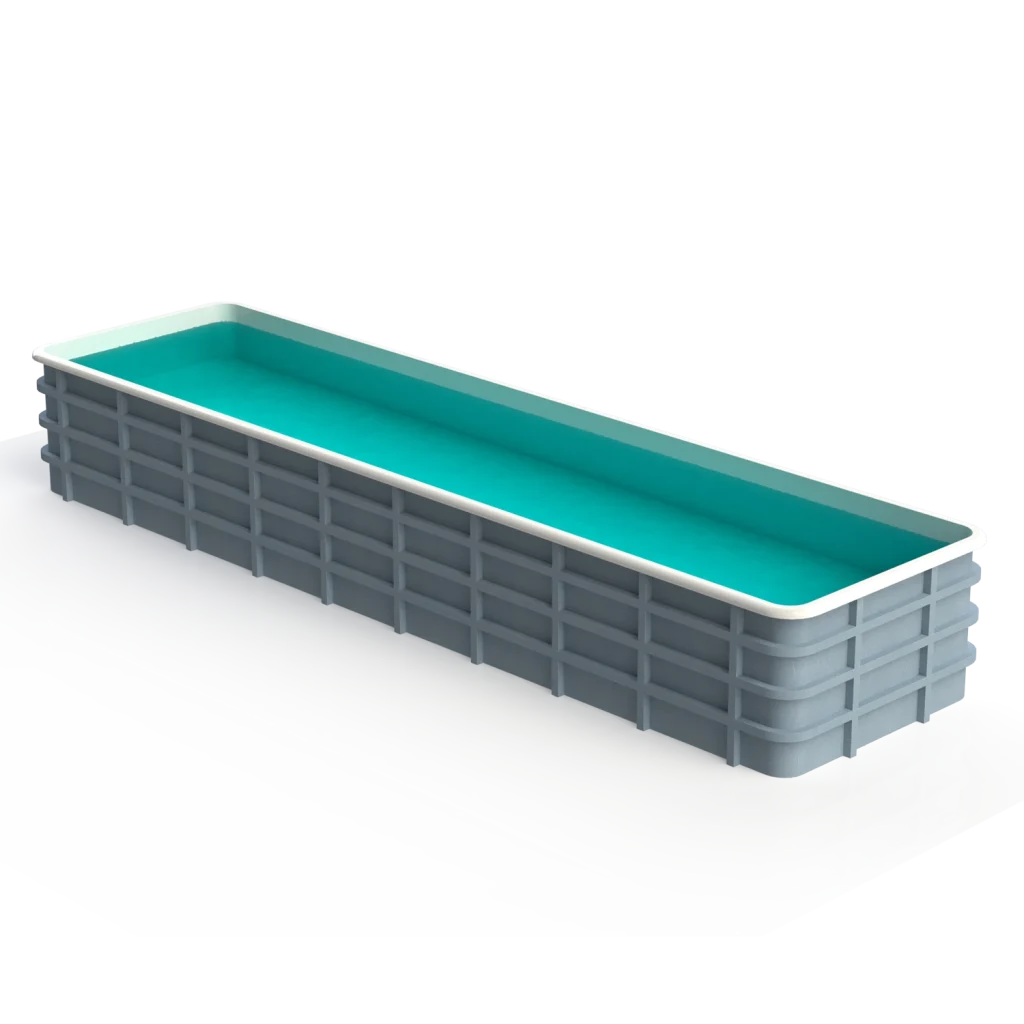
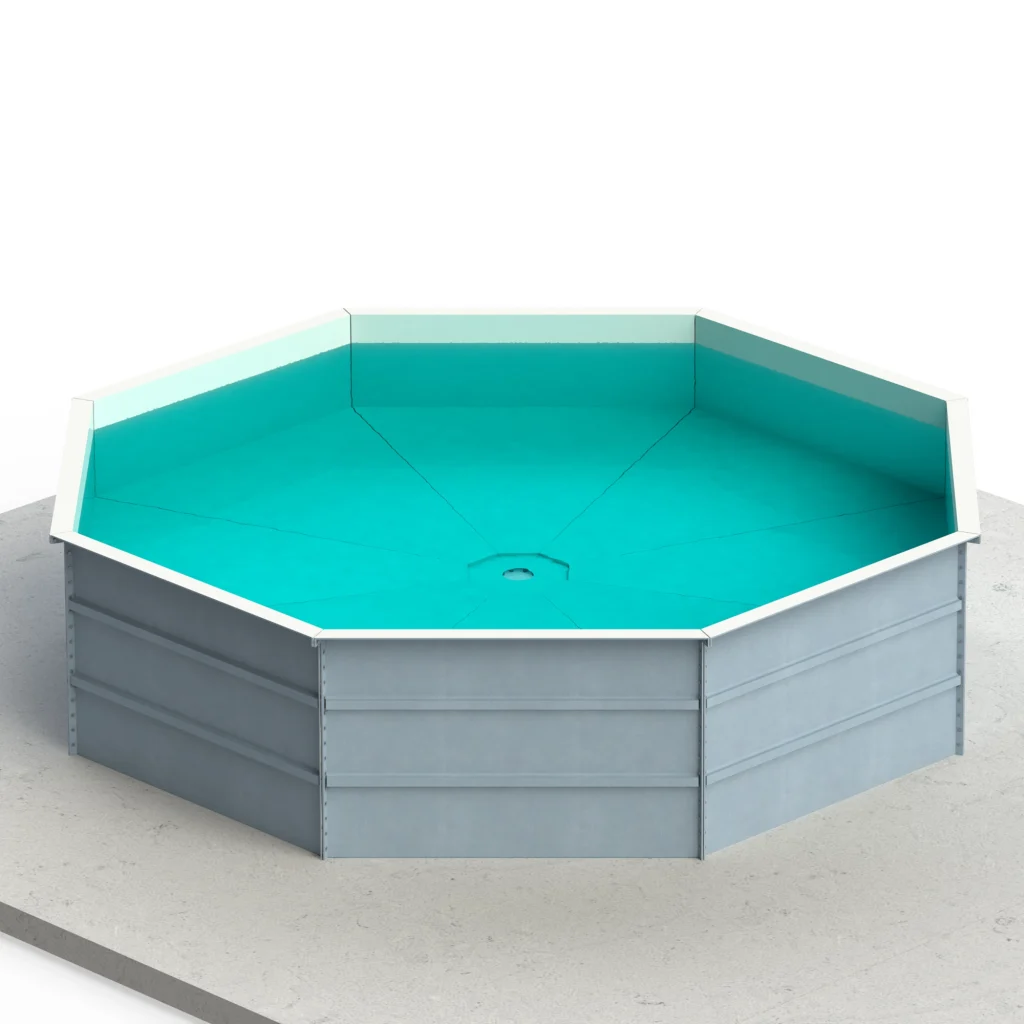
At AtlasAqua, we design aquaculture and RAS facilities where every engineering choice directly impacts biological performance, operational stability, and long-term profitability. Tank geometry is one of those critical decisions.
Rectangular and octagonal tanks are two of the most widely implemented configurations in modern aquaculture. Each offers distinct hydraulic behaviors, solid management characteristics, and operational advantages. Selecting the right geometry is not about trends—it is about aligning tank design with species biology, system intensity, and production goals.
This article provides a technical yet practical comparison of rectangular and octagonal tanks, helping farm developers and operators choose the most effective solution for their specific application.
Rectangular Fish Tanks in Modern Aquaculture
Rectangular tanks remain a foundational component of many hatchery, nursery, and grow-out systems. Their linear form integrates efficiently into modular building layouts and production corridors.
Hydraulic Characteristics
Rectangular tanks typically operate under linear-flow or cross-flow conditions. Water enters from one side or end of the tank and exits from the opposite side or through side drains. When inlet velocity, nozzle orientation, and turnover rate are properly engineered, this flow pattern can provide:
- Consistent oxygen distribution
- Controlled swimming activity
- Predictable waste transport
However, corners naturally create lower-velocity zones. Without proper hydraulic design, fine solids may accumulate in these areas, increasing cleaning frequency.
AtlasAqua addresses this through optimized inlet placement, directional flow nozzles, and optional internal flow guides that reduce dead zones and enhance solids mobilization.
Read more about Drum vs. Sand Filters: Which Is Better for Aquaculture?
Operational Advantages
Rectangular tanks offer several practical benefits:
- Efficient use of floor space
- Easy subdivision for grading and size separation
- Straightforward access for harvesting and inspection
- Lower fabrication and installation cost
These advantages make rectangular tanks well suited for hatcheries, nurseries, quarantine systems, and research facilities.
Considerations
While rectangular tanks can perform very effectively, they rely more heavily on precise hydraulic engineering and routine maintenance compared to rotational-flow tanks.
Octagonal Fish Tanks for High-Performance RAS
Octagonal tanks combine the advantages of circular hydraulics with a structurally efficient polygonal design. They are widely used in intensive RAS facilities where water quality control and solids removal efficiency are paramount.
Hydraulic Characteristics
Octagonal tanks are engineered to create rotational flow. Water enters tangentially, generating a circular current that moves toward a central bottom drain.
This rotational pattern produces:
- Uniform water velocity throughout the tank
- Strong self-cleaning action
- Efficient transport of feces and uneaten feed
- Improved oxygen and CO₂ exchange
For high-density production, these characteristics significantly reduce organic loading on biofilters and mechanical filtration systems.
Read more about : Top Smart Monitoring Tools for Aquaculture
Operational Advantages
- Excellent solids management
- Reduced manual cleaning
- Stable water quality under high biomass
- Well suited for integration with drum filters and centralized filtration loops
Octagonal tanks are commonly selected for grow-out stages and commercial-scale RAS operations.
Considerations
Initial investment is typically higher than rectangular tanks, and layout flexibility may be slightly reduced in narrow facilities.
Read more about : How Biofilters Maintain Water Quality and Fish Health.
Performance Comparison at a Glance
Rectangular tanks provide strong layout efficiency and cost advantages, while octagonal tanks deliver superior hydraulic self-cleaning and consistency. In practical terms:
- Rectangular tanks → Best for hatchery, nursery, and multi-purpose rooms
- Octagonal tanks → Best for intensive grow-out and high biomass systems
Matching Tank Geometry to Species Biology
Tank shape should support natural swimming behavior:
Active swimmers such as trout and salmon benefit from rotational flow environments, making octagonal tanks ideal.
Species such as tilapia and catfish adapt well to rectangular tanks with properly engineered linear flow.
Early life stages often perform better in rectangular nursery tanks where flow velocities can be kept gentle.
Read more about :Setting Up a Smart Aquaculture System: What You Need to Know
Facility Scale and System Strategy
At AtlasAqua, we frequently design hybrid facilities:
- Rectangular tanks for hatchery and nursery phases
- Octagonal tanks for grow-out and finishing
This approach balances capital cost, space efficiency, and long-term operational performance.
Energy Efficiency and Operating Cost
Octagonal tanks typically reduce mechanical filtration load and labor demand due to superior solids transport. Over the lifespan of a facility, this can translate into lower energy use and improved system stability.
Rectangular tanks remain a cost-effective option where budgets are constrained or operational flexibility is prioritized.
Read more about:UV Filtration: The Key to Pathogen-Free Fish Farms
AtlasAqua Design Philosophy
There is no universal tank shape that fits every project. The optimal solution emerges from a holistic evaluation of:
- Species and life stage
- Target stocking density
- Water treatment strategy
- Building geometry
- Capital and operating budgets
AtlasAqua designs and manufactures both rectangular and octagonal tank systems, fully engineered to integrate with filtration, oxygenation, and automation technologies.
Conclusion
Rectangular and octagonal tanks both play essential roles in modern aquaculture. The most successful facilities select tank geometry based on engineering performance—not convention.
By aligning tank design with biological and operational requirements, producers can achieve higher productivity, improved fish welfare, and long-term economic sustainability.