RAS Design by Fish Species: Trout, Carp, Sturgeon and Tilapia
A RAS that works well for one species cannot be copied directly to another. Temperature and oxygen needs, bottom- or water-column behaviour, feeding, growth period, harvest weight and market plan all change tank geometry and treatment capacity.
Read more about: How Does a RAS System Work? Water-Treatment Stages and Process Flow
Species selection is an engineering decision as well as a biological one
Fish species determines water temperature, oxygen and CO₂ management, tank depth, current velocity, solids behaviour, feed input, biofilter loading and energy cost. Even within one species, hatchery, nursery, grow-out and broodstock stages require different conditions.
Before design, confirm not only the species but also the genetic strain, stocking weight, harvest weight, growth curve, FCR, survival and market size. The comparisons below are preliminary design guidance; final values require current species data and production-specialist validation.
RAS for rainbow trout
Rainbow trout are active fish that require cool, oxygen-rich water. FAO species information emphasises a relatively narrow temperature range for growth and reproduction and culture conditions below 21°C. The project temperature must be refined for strain, fish size, target growth and welfare.
Minimum tank-outlet DO, CO₂, actual flow and temperature security are primary design points. Oxygen transfer and degassing must be designed together. If cooling is required, building insulation and heat recovery become important parts of economic feasibility.
Depending on the project, an oxygen cone or NANOB can transfer oxygen, while a degasser controls CO₂. Mechanical filtration should limit fine particles and gill loading.
RAS for common carp
Carp tolerate environmental variation better than trout, but commercial production should target conditions that support feed intake and FCR—not merely survival. FAO reports approximately 23–30°C for best growth; the project range should be narrowed for the stock and production plan.
Bottom-associated feeding and waste behaviour must be considered in tank hydrodynamics. Tolerance of low oxygen does not justify operating at low DO under intensive stocking. Post-feeding oxygen peaks, solids removal and biofilter loading remain critical to commercial performance.
RAS for sturgeon
Sturgeon are benthic fish that use bottom area intensively. Tank selection cannot be based on water volume alone; usable floor area, flow distribution, centre drainage, feed access and fish length must be considered. Long bodies and large harvest sizes also affect grading and handling equipment.
Temperature targets can vary considerably by species and life stage. In long-cycle projects such as caviar production, the biomass and capital exposed to one failure are much higher. Independent modules, quarantine, redundancy and long-term traceability therefore become especially important.
RAS for tilapia
Tilapia are warm-water fish suited to intensive culture, but high density increases oxygen, TAN, nitrite, CO₂ and solids loads. Warm water accelerates metabolism and biological reactions while reducing the oxygen-carrying capacity of water.
In cold climates, heating and building insulation may determine tilapia RAS feasibility. For a low- or medium-value species, energy, feed and capacity utilisation require particularly careful analysis. High theoretical stocking density does not automatically mean profitable production.
Read more about: Recirculating Fish Farm Setup Cost: The Technical Factors Behind the Price
Comparison of species-specific design priorities
|
Species
|
Temperature / energy
|
Tank and hydraulics
|
Primary process priority
|
|---|---|---|---|
Common engineering steps for every species
- Build the production schedule: stocking and harvest weights, batch count, survival and growth period.
- Determine maximum simultaneous biomass and daily feed load.
- Check tank geometry, floor area and solids transport as well as tank volume.
- Size mechanical filtration, biofilter, oxygen and degassing for the same maximum-load scenario.
- Calculate annual heating or cooling demand from source-water and target-species temperatures.
- Include quarantine, grading, harvest, redundancy and emergency procedures in the production plan.
Which species can use RAS-BOX?
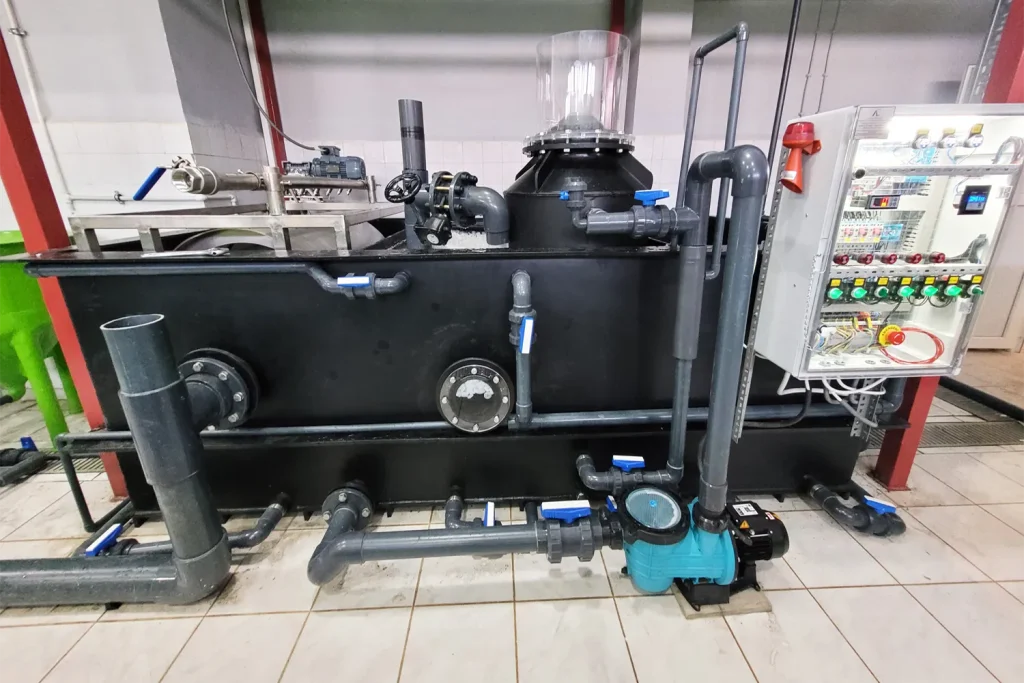
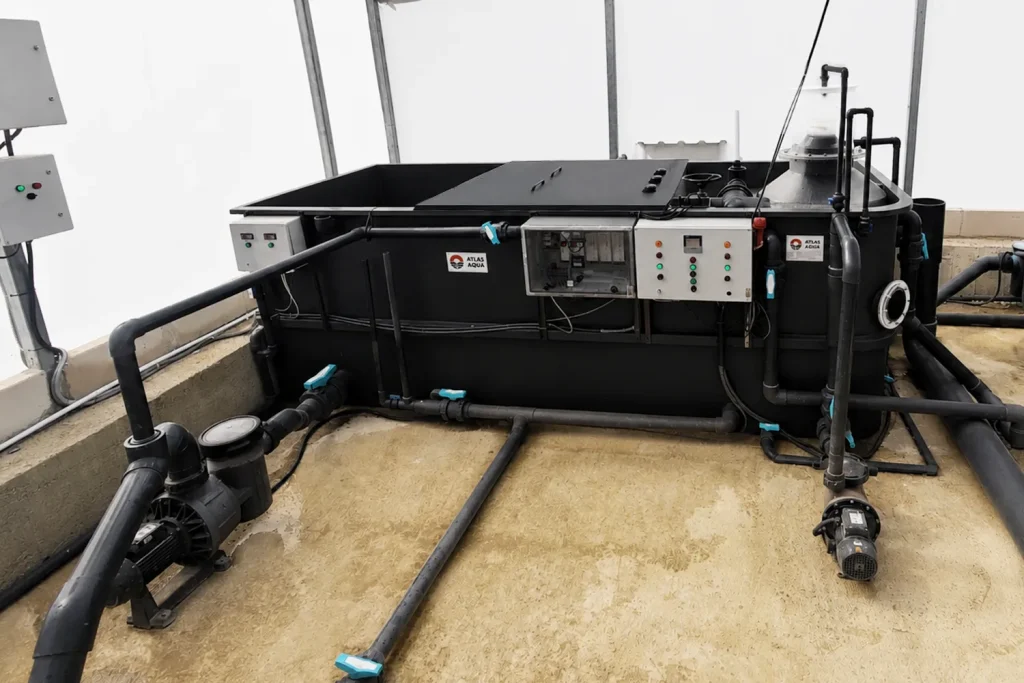
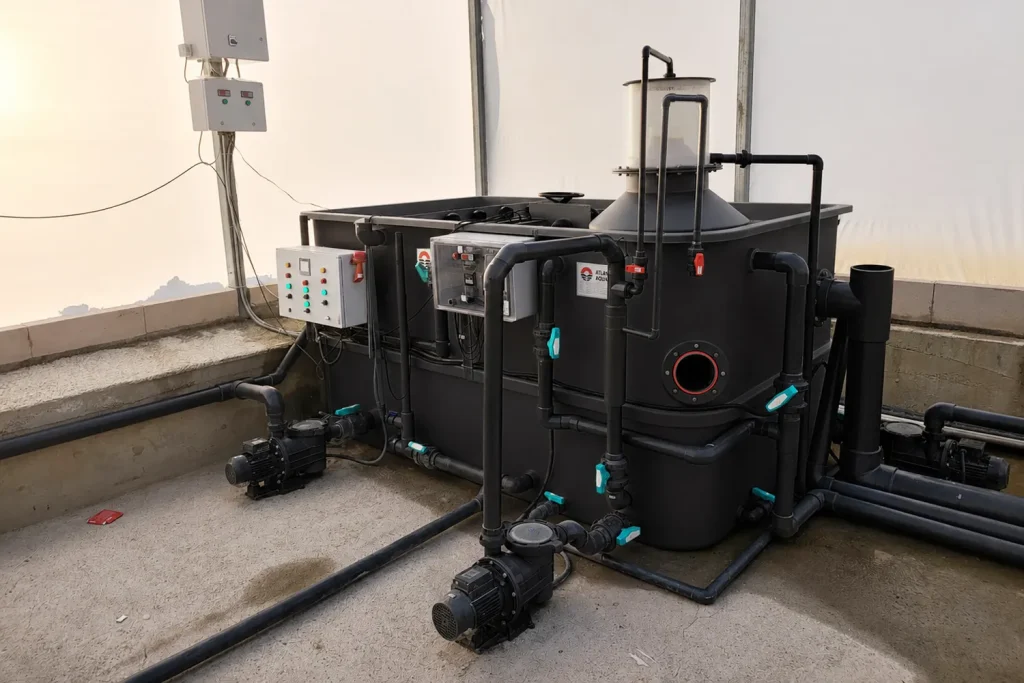
RAS-BOX is a compact treatment solution configurable for freshwater or seawater, feed load, required flow and selected auxiliary equipment. Suitability for a species must be verified from maximum feed, TAN, oxygen, CO₂ and temperature requirements—not tank volume alone.